
Overview
A sacred land of myths and mysteries inhabited by the ever-smiling people, it has not only exerted a magnetic pull upon travelers for centuries but also spies, missionaries, scholars, geographers, mystics, soldiers, and cranks, etc. Yet, only a few intrepid, serious, and determined have been able to make it.
Tibet was opened to tourism in 1985. Before this, it avoided influence from the West, and this country developed its unique culture and religion independently. Since Tibet was governed by spiritual leaders, monasteries and religious institutions were the backbone of power, so importance and prestige were shown by the size and magnificent architecture of these buildings. Tibetan Buddhism contains many elements of their older religion, “Bon Po”, which worshipped the sky, moon, sun, fire, soil, and even evil spirits, and this is why a monastery such as Tashilhunpo contains thousands of unique statues, paintings (thangka), and religious and historical books.
The Monasteries are crowded by pilgrims who often travel long distances to fulfill their vows and wishes, and their emotions show that religion still holds a very important place in their daily lives.
The Tibetan landscape changes from lush green to rugged, barren, harsh and cold, yet magnificent and awe-inspiring at the same time. The many serene and sacred lakes you come across make you truly understand why they say it’s the “water tank of Central Asia”.
Itinerary
Upon arrival, met by a representative and transferred to the hotel.
Rest of the day is free to relax.
Eve: A brief introduction of the trip followed by a welcome dinner. Passports will be collected for TIBET visa processing, which takes 3 working days.
After the dinner, transfer to the Hotel.
Overnight at the Hotel Kantipur Village or Similar
Meals: Welcome Dinner
Day Free in Kathmandu for Sightseeing or relaxing.
NOTE: The Chinese Embassy may require the physical presence of Visa applicants, so all Tibet Ride participants must be on standby should a last-minute visit to the Chinese Embassy be required.
Overnight at the Hotel Kantipur Village or Similar
Meals: Breakfast
FREE FOR PREPARATION FOR THE RIDE TO TIBET.
Overnight at the Hotel Kantipur Village or Similar
Meals: Breakfast
After breakfast, negotiate traffic out of Kathmandu city to the Ring Road cross section at Samakhusi. From here, follow the Tokha road to Jhor. We then start our small ascent to a Bhanjyang (Hill stop), cross an Army check post, then start our descent towards Likhu with the winding and narrow forested road. We will have a short break in Thana Bhangyang to see the beautiful mountain views.
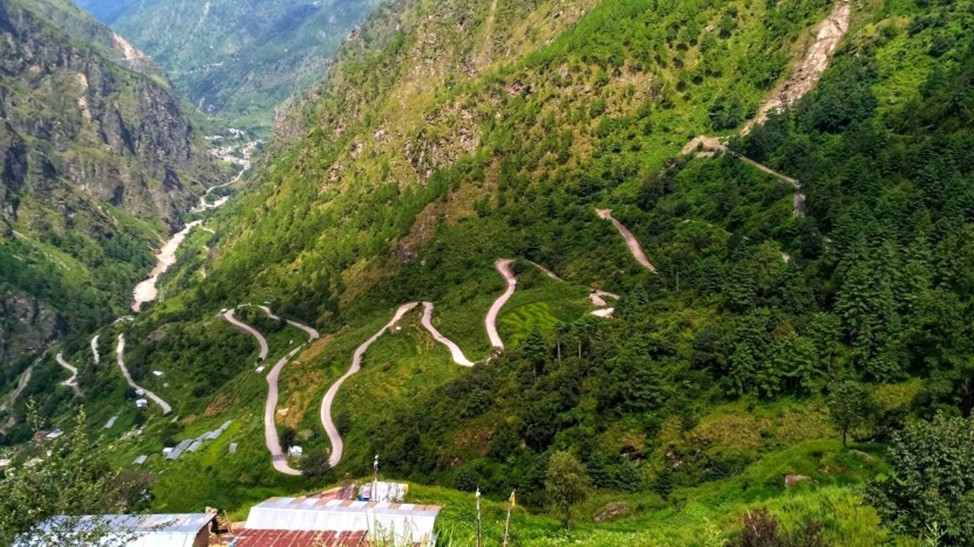
From here, it is a steep winding descent till Likhu Bazaar. From Likhu Bazar we head towards Trishuli Bazar. Deep forested areas, with clear flowing streams, waterfalls, rolling hills, the fast-flowing Trishuli River, ethnic villages, suspension bridges all make it a very interesting and enjoyable ride. However, the mountain roads are narrow, and one must be ever vigilant for any oncoming traffic at the sharp hairpin bends.
Note: The Visa for Tibet will be available by 12 noon, and one of our runners will carry the passports and Tibet visa and meet us on the road or at Shyabru Besi.
After lunch, head north and continue the ride, ascending slowly and surely all the way to Dhunche (2030 m). From here, steep descend on a winding and snaky trail for 19 kilometers to Syabrubesi (1460 m).
Note: There are many military and police checkpoints, and everyone is required to show permits; luggage will be searched. Note: The army is looking for animals and flowers that people take from the National Park.
Upon arrival at Syabrubesi, ride another 11 kilometers more to reach Timure (1900 m).
Overnight at the Guest House/Lodge in Timure
Meals: Breakfast, Lunch and Dinner
Route: Kathmandu – Jhor – Thana Bhanjyang – Likhu – Dhikure Bazar – Bidur – Betrawoti – Ramche – Dhunche – Thulo Barkhu – Syapru Besi - Timure
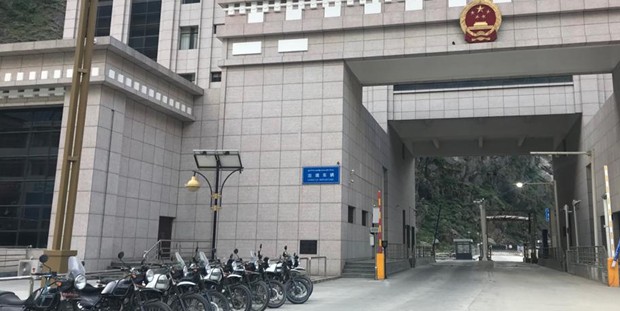
After breakfast, ride approx. 04 Km to Kyirong - Nepal / Tibet border, the last border town, complete Nepali Immigration formalities and cross the friendship bridge. Complete Chinese Immigration and meet the guide and driver from Tibet.
Proceed for China customs clearance for the motorcycles and after completion, load up the gear on the waiting Land Cruiser / Mini Truck and Ride/Drive for another 24 kilometers to Kyirong town.
Kyirong, one of the frontier counties of the Tibet Autonomous Region, lies in the southwest of Tibet and the southwest of Xigaze prefecture, covering 9,126 square kilometers with a population of 10 thousand.
Kyirong means “happy village” in Tibetan and is one of the important towns in Kyirong County, with a sea level of 2,700 meters. Pagba Monastery, Chagar Monastery, and Qiangzhen Monastery are the main monasteries of Kyirong, and Kyirong Jiangcun Nature Reserve is a famous beauty spot.
Up to 1960, one of the main trade routes between Nepal and Tibet passed through this region. Easily accessible from Nepal, it was used several times as an entrance gate for military actions from the site of Nepal against Tibet.
Upon arrival, check in to the hotel. The rest of the day is free to relax or explore around the town to acclimatize.
Overnight at Hotel Kyriong Qomolanzom Hotel
Meals: Breakfast, Lunch and Dinner
Route: Friendship Bridge, Rasuuwagadi – Thuman View – Gyirong Zangbo – Mangmu – Chongsecun - Kyirong
Today is a most enjoyable day’s ride all the way to Tingri as we head eastwards with the sun in our face.
It’s a scenic ride crossing over passes (Guntung La at 5200 m), the famous Paikut Tso (lake), and then the trail wends upwards to the Northeast route sprawling over traditional picturesque villages. This scenically rewarding ride/drive provides plenty of opportunities for photography. On this day’s ride over the sandy and rocky landscape of Tibet, other sites like lakes, nomads chasing hundreds of yaks and sheep, keep you busy. Look out for the Kiang “Wild Ass” that roams freely in big herds, the Tibetan Antelope, and the Marmots.
As we ascend to the top to meet up with the main Friendship Highway, it is a direct route from Lhasa to Kathmandu, where the mountains are dwarfed by the vastness of the Tibetan plateau.
Descend for about 50 kilometers to the settlement of Tingri, a line of houses (hotels, restaurants, and shops) on either side of the street.
Tingri used to be an important trading post where Sherpa from Nepal exchanged rice, grain, and iron for Tibetan wool, livestock, and salt. It gives its name to the broad upland basin more than 4,500 meters high that is known as the Tingri plain. Shallow, fast-flowing rivers of melted snow water make its grassy meadowland ideal for grazing by livestock.
Overnight at the Tingri Kangkar Hotel
Meals: Breakfast, Lunch and Dinner
Route: Kyirong – Ruka'er – Kaire Pubu Waterfalls – Jilonggou – Womacun – Gyirong Wood inspection Station – Gyirong county – Pulaika – Cuomushe Bridge – Pikut Tso Lake – Lumake Wuqiao – Mainpu Township – Zhaguoxiang - Tingri
After breakfast, Ride for another 88 km; we reach Lhatse. On the way, we reach the highest Gyatso La pass at 5228 m, which is marked by an array of prayer flags and a gate. This is the highest point on this stretch of the ride.
After taking breaks in Lhatse, continue riding for 130 km to reach Shigaste. The route today is scenic with only a small pass of 4300 m.
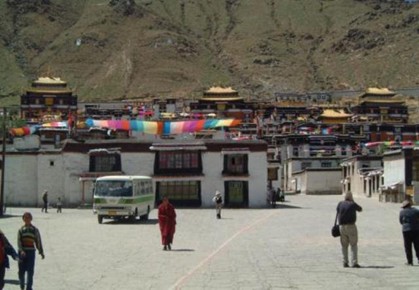
PM: Visit Tashilhumpo Monastery. The Panchen Lama’s Tashilhumpo Monastery was founded in 1447 AD by Gendun Drup, the first Dalai Lama. It is the seat of the Panchen Lama, who is second to the Dalai Lama in the Tibetan Buddhist Hierarchy. The 5th Dalai Lama declared that his teacher, then the Abbot of Tashilhunpo, who is the manifestation of Buddha Amitabha as the Panchen Rinpochhe. Tashilhunpo has one of the world’s largest statues - a 9-storeyed gilded bronze statue of Maitreya, the future Buddha. Also visit the Flea Market of Shigatse and browse around this ancient market looking for souvenirs.
Upon arrival at Shigatse, check into the hotel.
Overnight at the Shigatse Gesar Hotel
Meals: Breakfast, Lunch and Dinner
Route: Tingri – Chajiaqu – Qomolangma National Natural Reserve – Lhatse county – Pazi – Liuxiang – Chongdacun – Saigui village - Nadangcun - Shigatse
Today we will provide all our documents for the Temporary License for Tibet and, along with visiting the office for biometric.
After the Biometric, Ride towards Gyantse, which is a 90-kilometer journey but seems like hours because of the 40 kmph speed limit imposed by the traffic police. There are regular checkpoints as well as Patrol cars to strictly implement the rule.
Gyantse is a pastoral town and still retains the charm of a traditional Tibetan town untouched by modern expansion. It made world headlines in 1904 when Colonel Younghusband, who led the British Expedition to Tibet, defeated the Tibetan army there. As a crossroad on the principal trade route to India, it used to be renowned for the excellence of its carpets. The compound, encircled by an impressive wall, once contained 19 monasteries, presided over by the still intact fortress perched atop a nearby mountain.
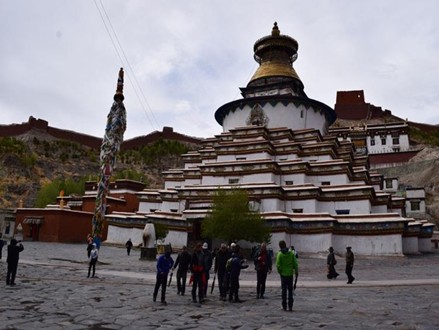
Late PM: Sightseeing tour of Gyantse Kumbum, one of the most unique and magnificent buildings in Tibet, consisting of 6 storeys complete with a Buddhist Hall and a prayer hall. It has 112 chapels, and its walls are adorned with religious paintings. Built in the 15th century, it has withstood all battles and revolutions since. We also visit the Pelkhor Chode Monastery located near the Khumbum; it was founded in the 15th century. It has been remarkably well preserved, and many of the statues and paintings inside date back to the time of its founding.
Overnight at the Gyanste Yuthok Hotel
Meals: Breakfast, Lunch and Dinner
Route: Shigatse – Gyamcoxung Township – Bazai Township – Bainang county – Gyantse
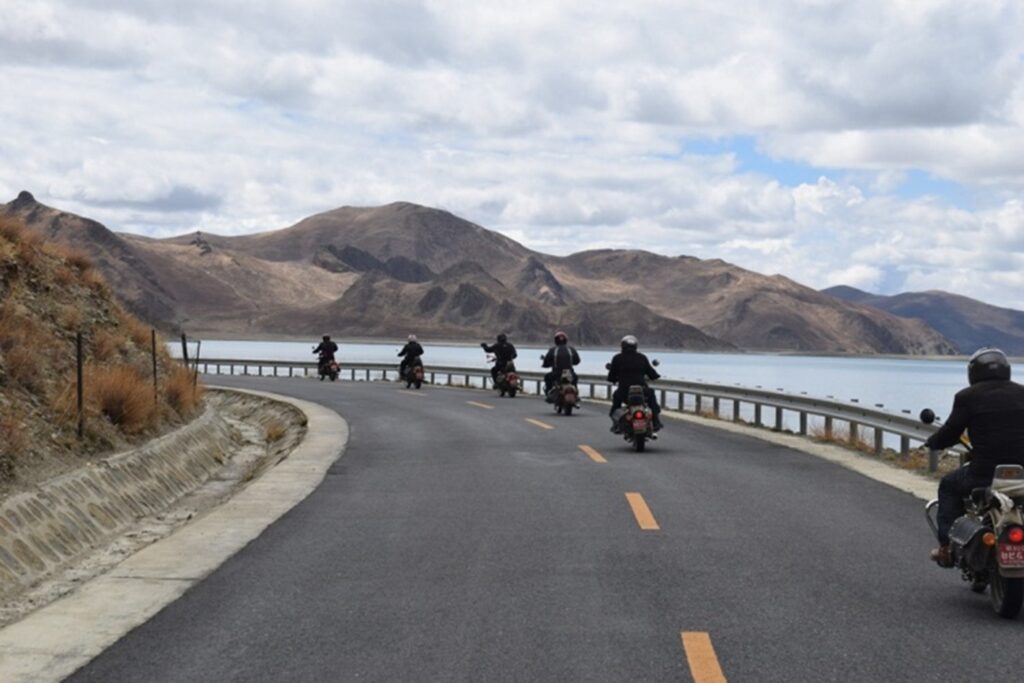
Set out of Gyantse for Nagartse (100 kms) near Lake Yamdrok, passing the Simi La (4200 m) and riding on a trail with fantastic views of the turquoise blue waters of the man-made lake caused by the dam for the hydro project. Later, we also cross the Karo La (5010 m) and then ride to Nagartse, a small village near the Yamdrok lake and an ideal place for a lunch stop.
Then ride along the picturesque trail of the colorful Lake Yamdrok, the Tibetan lifeline of the river Brahmaputra (Yarlung Tsangpo). Yamdrok Tso or Turquoise Lake is a lake of a glaring blue that radiates a near-mystical charm. It is about 240 kms in circumference and is more like an Island Sea. There are Yak herders around, and the lake itself supports a population of scale-less fish in its non-saline waters. It is about 124 km from Lhasa.
Later we ascend to Kamba La (4,794m) and have an opportunity to meet the Yak Herders with their finely decorated Yaks and Tibetan Mastiffs. A great photo opportunity, and one can take pictures on a Yak or with a bunch of decorated Tibetan Mastiffs for a fee.
From here we descend to the main road head before embarking on the grand finale entrance to Lhasa City.
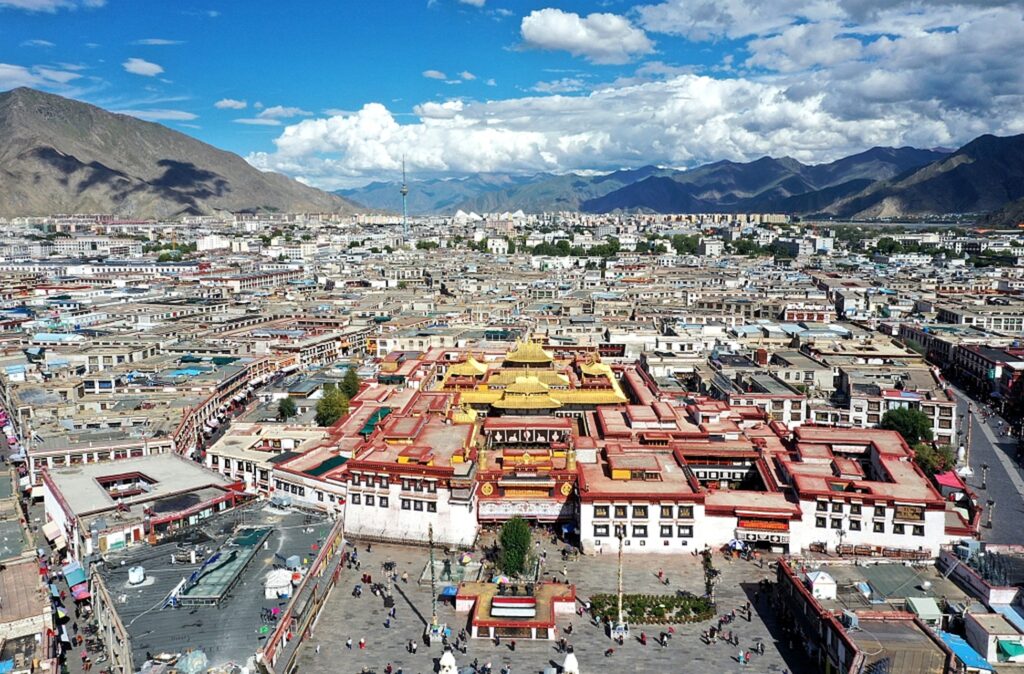
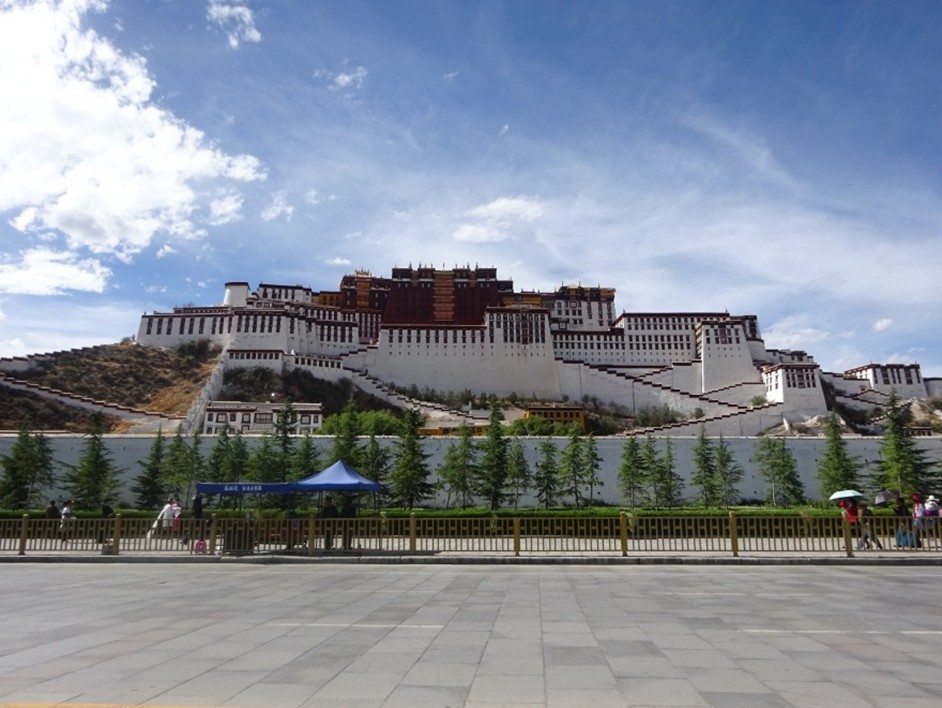
Lhasa - capital of Tibet at an altitude of 3650m is situated on the north bank of the Kyichu River in the province of U (central Tibet). Two high craggy hills stand up in isolation from the valley floor. One, Red Hill, is topped by the Potala Palace, and the other, Chockpori or Iron Hill, is crowned by a tall antenna. Lhasa in Tibetan means "Place of the Gods" and Potala Palace, the residence of the Dalai Lama (the God king), is the earthly representation of the celestial Palace of Avaloketswora, the Buddha of infinite compassion whose incarnation in human form is believed to be the Dalai Lama. As Tibet’s political, religious and cultural centre, it is a city truly blessed by the gods, where life is unhurried, people jovial and yet remaining staunchly independent.
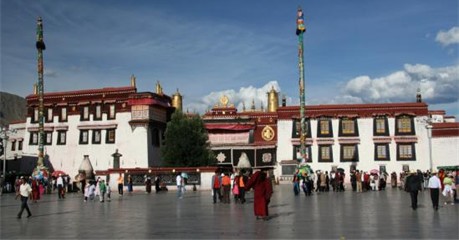
Lhasa consists of two distinct parts with different architecture, population, and lifestyle. Old Lhasa, the Tibetan section, centers on the Jokhang Temple. Its streets are narrow, between white-washed stone houses whose walls slope inward as they rise. Windows are framed in black trapezoids, with protruding fan-shaped eaves above. Many houses have brightly painted woodwork. The Chinese section was built in the last 30 years around the base of the Potala. It is characterized by straight, broad streets and utilitarian buildings that house Chinese-style department stores and all kinds of government houses.
Despite its forced pace of modernization, Lhasa has not lost its soul. It is a friendly city where a Tibetan will always return a smile.
Overnight at the Lhasa Saikang Hotel
Meals: Breakfast, Lunch and Dinner
Route: Gyantse – Jiarecun – Manla Reservoir sightseeing zone – Wengmu Tangpu – Nagartse – Baidicun – Langbuqi viewing platform – Jiangtangzhen – Qushui Yaluzangbujiang Bridge – Jingtu Animal Protection Zoo – Lasahe Bridge – Caina Grand Bridge – Sangda Grand Bridge - Lhasa
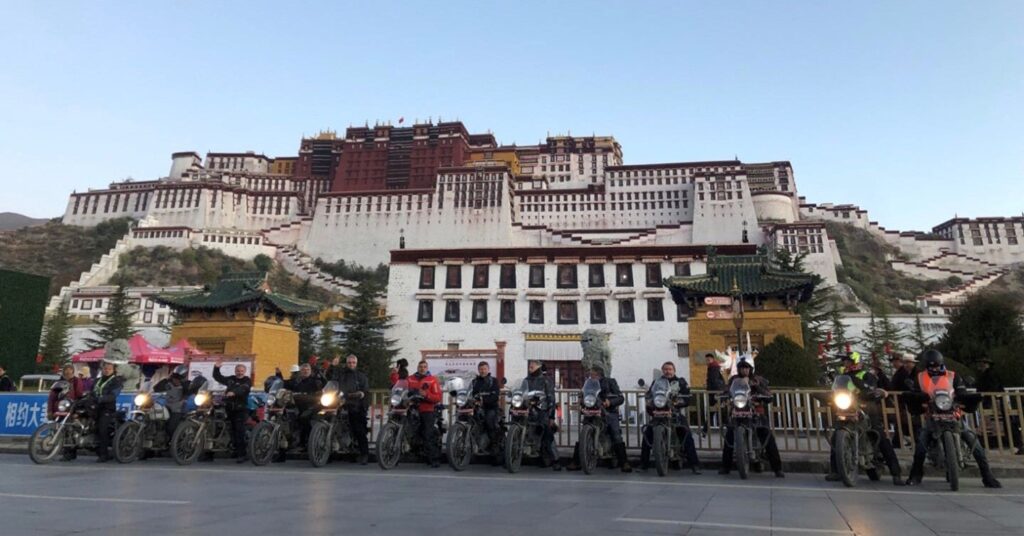
After breakfast, proceed for the sightseeing tour of Potala Palace, Jokhang Temple and Bharkhor Kora.
Potala Palace: This architectural wonder - a spectacular edifice whose gold roofs soar high above the town and rise more than 300 meters above the valley floor and can be seen from all directions for miles around. The Potala Palace was built mainly during the Fifth Dalai Lama's reign in 1645-1693 and remained the centre of political and religious power for the Dalai Lamas until the 14th. With over 1000 rooms, it contains the living quarters of the Dalai Lamas and their magnificent golden tombs after their death. Regents, tutors, and other high lamas had apartments in the palace too. The Potala held the offices of government, a huge printing house and a seminary run by the elite order of monks who surrounded the God-King to train government officials. Hundreds of elaborately decorated chapels and shrines, halls and corridors contain thousands of gilded statues - Tibet's pantheon of Buddhas, Bodhisattvas, saints and demons.
Today the Potala is a statue museum with 35 caretaker monks, but to thousands of Tibetan pilgrims, it remains a beloved shrine. Jokhang Temple is situated in the heart of old Lhasa; it houses Tibet’s most precious religious relic, a golden Shakyamuni Buddha which was brought as a gift by the Chinese Princess Wen Cheng on the occasion of her wedding to the Tibetan King, Songtsen Gampo.
JOKHANG dates back to the 7th century A.D. Legend says that Songtsen Gampo, who built the temple, threw his ring into the air, promising to build a temple where it landed. The ring fell into a lake and struck a rock where a white stupa miraculously appeared - an auspicious sign. Surrounding the Jokhang Temple is the bustling Barkhor marketplace, which is the religious and social focus of Lhasa. This, the spiritual center of Tibet, is also the heart of Lhasa.
Barkhor Kora: Surrounding the Jokhang Temple, Barkhor Street is a bustling marketplace and a popular pilgrimage circuit. Stroll along the vibrant street, browse through shops selling traditional Tibetan goods, and soak in the lively atmosphere. It's a great place to buy Tibetan handicrafts, prayer flags, and other souvenirs.
After the Completion of the Kora, return to the hotel.
Overnight at the Lhasa Saikang Hotel
Meals: Breakfast, Lunch and Dinner
After breakfast, ride Lhasa to Yangbajain. The first leg of your journey would be from Lhasa to Damxung County. This portion of the journey takes you through some beautiful Tibetan landscapes, including vast grasslands and nomadic settlements. The distance is approximately 90 kilometers and can take around 1.5 hours by road, depending on traffic and road conditions.
Upon arrival at Yangbajain/Yangbachen, take some time to explore the area. Yangbajain is famous for its hot springs, which are known for their therapeutic properties. You can relax and rejuvenate in one of the local hot spring resorts after your journey.
Ride out of Yangbajain on the southern route towards Shigaste. Ride till the Dazuka and continue on the Northern Route along the Brahmaputra River. The route from this point is relatively straightforward but scenic at times when we ride along the Yarlung Tsangpo (Brahmaputra River).
Upon arrival at Shigatse, check into the hotel.
Overnight at the Shigatse Gesar Hotel
Meals: Breakfast, Lunch and Dinner
Route: Lhasa – Xiong Ba La Qu Tourism Village – Changdong – Deqingxiang – Yangbajain – Xiabo Songduo – Majiang Town – Dazi Town – Dazhuka – Xigaze Peace Airport - Shigatse
Start today’s long journey from Shigatse to Shegar. Continue on the Friendship Highway to arrive at Lhatse in 3 hours (130 kms). Then ascend to the highest Gyatso La pass at 5228 m, which is marked by an array of prayer flags and a gate. This is the highest point on this stretch of the ride. Descend a little, and weather permitting, one can get a glimpse of Mt. Everest. Continue to descend and arrive at New Tingri/Shegar, a big bustling town in about 2 hours (113 kms).
Shegar is surrounded by mountains and is another town that lies in the shadow of a great fortress. Even in ruins, it is majestic. Seeming to grow out of the craggy brown rock, its sinuous wall bristles with watchtowers like stegosaurus spines. Isolated in 1855 by marauding Nepalese in search of booty, the Gurkhas cut off the dzong’s water supply and settled in for a long siege. Shegar proper has little to recommend except the highest post office in China.
From Shegar, set out for Rongbuk, and arrive at the army check post and then, in another 4 kilometers, leave the main highway and enter the Qomolangma National Park. This will be a long day’s ride. After the permits and purchase of National Park entrance tickets and once again riding for about 2 kilometers to arrive at another check post, which is operated by the Qomolangma National Park and is the gateway into the Qomolangma (Everest National Park). Here, it is mandatory to present all the National Park entry permits for clients as well as the motorbikes.
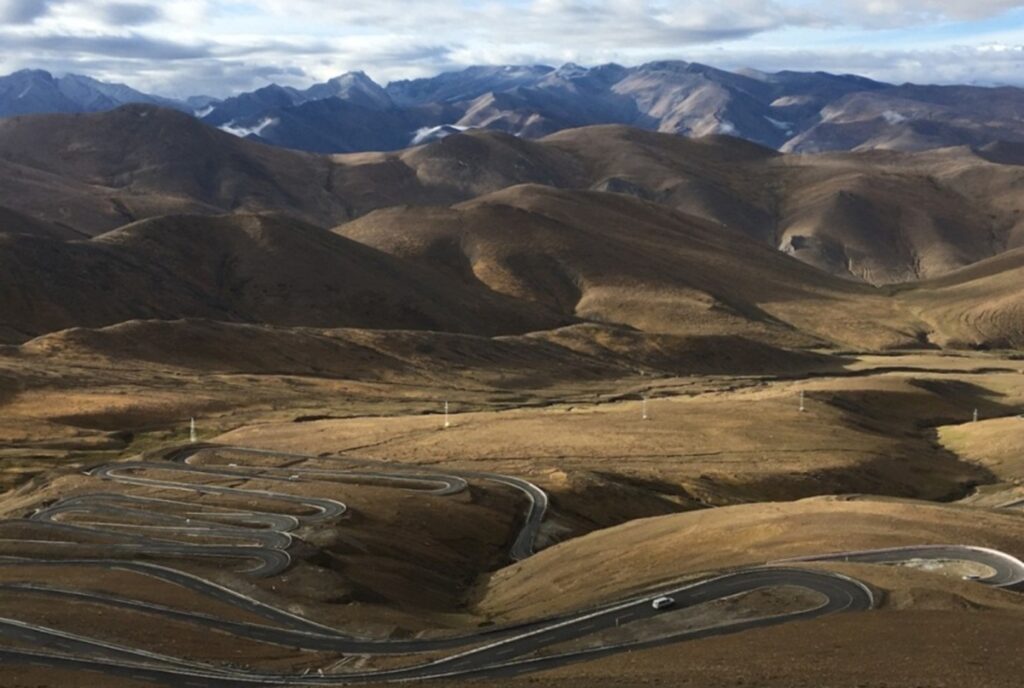
After receiving clearance, ascend on a zigzag trail to Gyawla Pass at (5200 m), which is strewed with prayer flags. A few entrepreneurs set up shop selling souvenirs, prayer flags, and tea / cold drinks / canned juice. Pilgrims purchase these prayer flags and, after writing the names of the family members, stretch them along the hillsides. It is believed that as the wind flutters the flags, their prayers reach heaven. Weather permitting, there are great views of Mt. Makalu, Mt, Everest (Qomolangma), Cho Oyu, and others.
After a stop to view the Himalayas, descend once again, zigzagging our way on 100 switchbacks all the way to the valley floor and then drive towards the settlement of Tashi Dzom.
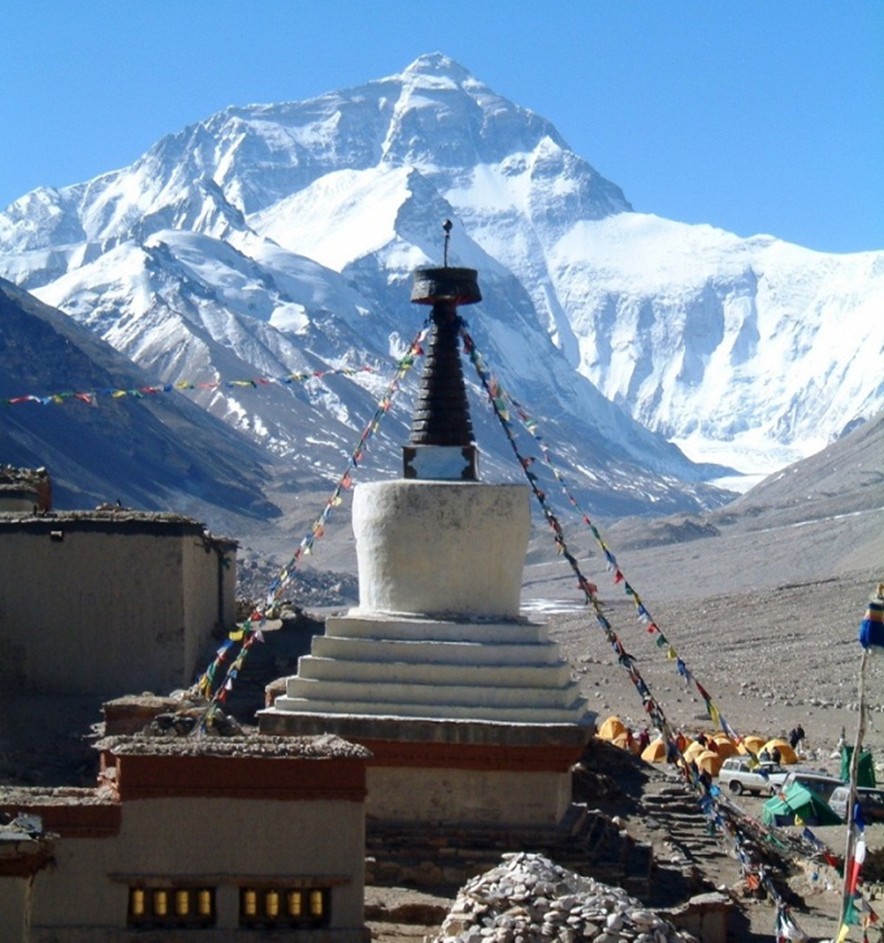
Upon arrival at Tashi Dzom, Park your motorbike, carry the necessary things that are required & board the waiting electric bus for the 45-kilometer drive to Rongbuk following the Drakar Chu (River) and making a slow but steady ascent. After a while, the views of Mt. Everest loom over us, and as we turn a bend, we suddenly arrive at Rongbuk and the Lodges. In the distance, towering above everything else is the magnificent and awe-inspiring view of Mt. Everest – Mother of the Earth at 8848 m. Following a close second is the Rongbuk Monastery with its Massive Chorten and ancient monastery.
Upon Arrival at Rongbuk, spend some time at the tented city for a cup of tea/ noodle soup or shop for souvenirs or even send a postcard from the mobile post office, which is considered to be the highest post office in the world at 5200m.
VISIT RONGBUK MONASTERY
Rongbuk Monastery was established around the early 20th Century and is considered to be the highest monastery in the world. It is governed under the Nyingmapa Sect (one of the 4 major sects of Buddhism). The Rongbuk Valley is known as the “sanctuary of the birds,” and there is a strict ban on killing any animal in the area. There are herds of Blue sheep that dot the hillside as well as the roadside and sometimes also come down to the monastery.
The monastery was razed in the 1960s by a fire, and rebuilding took place at Rongbuk Monastery in the late 1980s and early 1990s. The monastery has now been resurrected, along with the stupa that figures prominently in tourist photography of the scene. In Rongbuk Monastery, some of the murals are superb. The monastery and its large chorten make a great photograph with Mount Everest thrusting its head skyward in the background.
Overnight at the Rongpuk Hotel
Meals: Breakfast, Lunch and Dinner
Route: Shigatse – Nadangcum – Geding – Liuxiang – Zengsi – Gyatso La Pass – Lhatse – Qomolangma National Nature Reserve – Gyaco Township – Tingri – Qomolangma Biological Park Protection Zone – Zhaxizongcun – Tashi Dzom
After Breakfast, Board the Electric bus and drive back to Tashi Dzom.
Upon arrival at Tashi Dzom, load the backup vehicle with your luggage & continue to the 26-kilometer marker. Leave the main road and take the small dirt track on the left leading to the river. Cross the bridge and head off with a steady climb through scattered Tibetan settlements. The road passes directly through the village and then descends steeply. On the other side of the ridge, we then start the climb through valleys with scenic views of the Tibetan landscape and fast-flowing river to the highest plateau of the world. This area is still dry and dusty, and has not been paved yet, and allows for some entertaining off-road riding.
Dusty and weary, we arrive at the high Tibetan plateau with good views of Cho Oyu (8201 m) and enter the settlement of Thingri in about 3 hours by covering a distance of 70 kilometers. Thingri used to be an important trading post where Sherpas from Nepal exchanged rice, grain, and iron for Tibetan wool, livestock, and salt. It gives its name to the broad upland basin more than 4,500 meters high that is known as the Thingri plain. Shallow, fast-flowing rivers of melted snow water make its grassy meadowland ideal for grazing by livestock.
Continue riding on the highest plateau of the world with a typical view of the Tibetan landscape offering a sheer feeling of standing on the roof of the world. As we ascend to the Lalung La (5,200 m), from where, weather permitting, there is a breathtaking panorama of beautiful Himalayan ranges including Mt. Everest (8,848.48 m), but it is dwarfed by the vastness of the Tibetan plateau.
Leave the Friendship Highway, turn right at the crossroad, then ride through the desolate plain of Digur Tang with its enormous sand dunes and the snowcapped peaks of Shishapangma (8012 m.) and Langtang (7232 m.) in close proximity to the south. Leaving the Bum- Chu basin, we descend towards PelkhuTso (4600 m.), a stunningly beautiful lake into which the glacial streams of Da-Chu and Lha-Chu drain.
Then ascend steeply to Guntung La (5236m) and then descend to Kyirong.
Upon arrival, check in to the Hotel.
Overnight at Kyirong Qomolanzom Hotel
Meals: Breakfast, Lunch and Dinner
Route: Tashi Dzom – Niangmudacun – Shire – Tingri – Paiku Tso Lake – Gyirong County – Jilonggou – Kaire Pubu Falls – Kyirong
After early breakfast, ride down 24 km to the border of Nepal and Tibet. Here we bid farewell to our Guide and Rider from Tibet, complete Chinese immigration, cross the small makeshift bridge, and enter Rasuwagadhi, Nepal.
Met by representatives from Nepal to assist and complete Nepal Customs and Immigration, which takes some time, and we enjoy a break for tea/coffee and some Nepali / India snacks.
The Ride from here is along the Pasang Lhamu Highway, with switchbacks and dirt sections. This section of the highway is vulnerable to landslides and regular blockades during the monsoons. As we descend along the winding road, we will ride along the edge of the Langtang National Park, which will fall on your left. Most of the Ride today will be slow and steady as this section is the major entry for goods to Kathmandu from China. We will come across big trucks, and the road is just big enough for them. So, giving way and waiting turns at corners and narrow stretches is time-consuming.
From Nuwakot, ride another 60 km via Dhikure and Gurje Bhanjyang, which takes 3 hours.
Upon arrival at Kathmandu, check into the hotel.
EVE: Farewell dinner.
Overnight at the Hotel
Route: Kyirong – Chongsecum – Mangmu – Gyirong Zangbo – Thuman view – Friendship Bridge, Rasuwagadi – Timure – Syapru Besi – Thulo Barkhu – Dhunche – Ramche – Betrawoti Bazar – Bidur – Dhikure Bazar – Likhu – Thana Bhanjyang – Jhor – Tokha - Kathmandu
After breakfast, met by a representative and transferred to the airport for the onward flight home. (Reporting time is at least 3hrs before flight time.
INCLUDES
- NEPAL PORTION
- • Cost of all transfers to and from airport/hotel/airport in a private deluxe a/c vehicle accompanied by a representative.
- • Cost for the hire of Royal Enfield Himalayan 450 cc
- • Cost for the fuel for the bike.
- • Services of an experienced Road Captain on motorcycle including his meals, accommodation, and daily allowances.
- • Services of an experienced mechanic including his meals, accommodation, and daily allowances.
- • Support of a 4X4 backup vehicle to carry luggage and spares for Nepal portion Kathmandu /Timure /Tibet border (Pre Tibet-Tour) Tibet border / / Kathmandu (Post Tibet Tour) including fuel and driver and his daily allowances. (NOTE: SERVICE OF 02 BACK UP VEHICLE WILL BE USED FOR 10 & ABOVE GROUP)
- • Accommodation on twin sharing basis and inclusive of breakfast at Hotel Kantipur Village in Kathmandu (04 NIGHTS)
- • Accommodation on twin sharing basis and inclusive of breakfast and dinner in Timure Hotel (01 Night)
- • All Government taxes
- TIBET PORTION
- • Visa Fee for Tibet of USD 120.00.00 (process which takes two working days) per person for all nationals except US nationals (US nationals need to pay an additional USD 120.00) (Visa fees are subject to change without notice)
- • Cost for the hire of Royal Enfield Himalayan 450 cc
- • Cost for the fuel for the bike.
- • Services of an experienced Road Captain on motorcycle including his meals, accommodation, and daily allowances.
- • Services of an experienced mechanic including his meals, accommodation, and daily allowances.
- • 01 Support of a Twin Cab Truck in Tibet to carry spare parts, extra motorbike and luggage and mechanic for the entire trip as per the itinerary.
- • Documentation for Tibet travel permit and a special permit for Everest Base Camp.
- • Services of a knowledgeable Tibetan Guide from Lhasa Agency for the entire tour.
- • All Meals (Lunch & Dinner) throughout the itinerary
- • Permit for Motorcycles to enter Tibet and the Everest Base Camp region in Tibet.
- • Twin-sharing accommodations with daily breakfast at local best hotels and guest houses; 02 nights at Kyirong Qomolongma Hotel, 01 night in Tingri Kangar Hotel, 02 nights in Shigaste Gesar Hotel, 02 nights in Lhasa Saikang Hotel, 01 night in Gyantse Yuthok Hotel & 01 night at Rongpuk Hotel or similar standard hotel
- • Bike compulsory insurance
- • Bike border paperwork
- • Temporary bike driving license
- • All monastery entrance fees during sightseeing tours
- • Electric bus Ride/Drive from Chuzom / Rongbuk Monastery / Chuzom (as per the itinerary).
- • Comprehensive medical kit.
- • One oxygen cylinder (10 liters)
EXCLUDES
- NEPAL PORTION
- • International Airfares.
- • Nepal Visa fees (If applicable).
- • Personal Insurance
- • Meals (Lunch and Dinner) during the stay in Kathmandu (Except welcome & Farewell dinner)
- • Snacks and coffee during Ride/Drive break throughout the trip.
- • Items of a personal nature such as bar bills, telephone calls, laundry, extra mileage and any extra costs incurred due to natural calamities, flight delays etc.
- • Insurance for or against accidents, loss of life, theft etc.
- • Personal insurance, evacuation and medical expenses.
- • Tips for the Guide, Road Captain, Mechanic, Hotel Staff etc. on tour.
- • Costs incurred due to cancellation of flights, altitude sickness or unforeseen circumstances (riots, natural calamities etc.) and situations beyond the control of Moto Himalaya Tours & Travels (P) Ltd and its associates.
- • Any item not mentioned in the above ‘cost includes’.
- TIBET PORTION
- • Supplement for TIBET visa for US nationals of USD 120.00 per person
- • Flight delays or cancellation due to adverse weather conditions.
- • Photography charges for still and Video cameras inside monasteries.
- • Items of a personal nature such as bar bills, alcoholic beverages, bottled drinks and mineral water, extra mileage, etc.
- • Personal gratuities such as tips to Road captain, mechanic, hotel staff, guides and drivers etc.
- • FINE for venturing into a prohibited area
- • Oxygen and Mineral water
- • Costs incurred due to natural calamities, strikes, breakdowns and beyond the control of Moto Himalaya Tours & Travels (P) Ltd and its associates.
- • Items not mentioned in the cost include